Degree Show 2026
Zoe Naylor-Perrott
BA Sustainable Fashion
I am a BA Sustainable Fashion graduate with a passion for brand communications, marketing, and sustainability. My work explores how fashion and sport can be used as powerful platforms for positive change, combining innovative materials, circular thinking, and consumer engagement. Through projects such as Re-Armoured and InsideOut, I investigate how brands can communicate sustainability in ways that are both impactful and commercially viable.
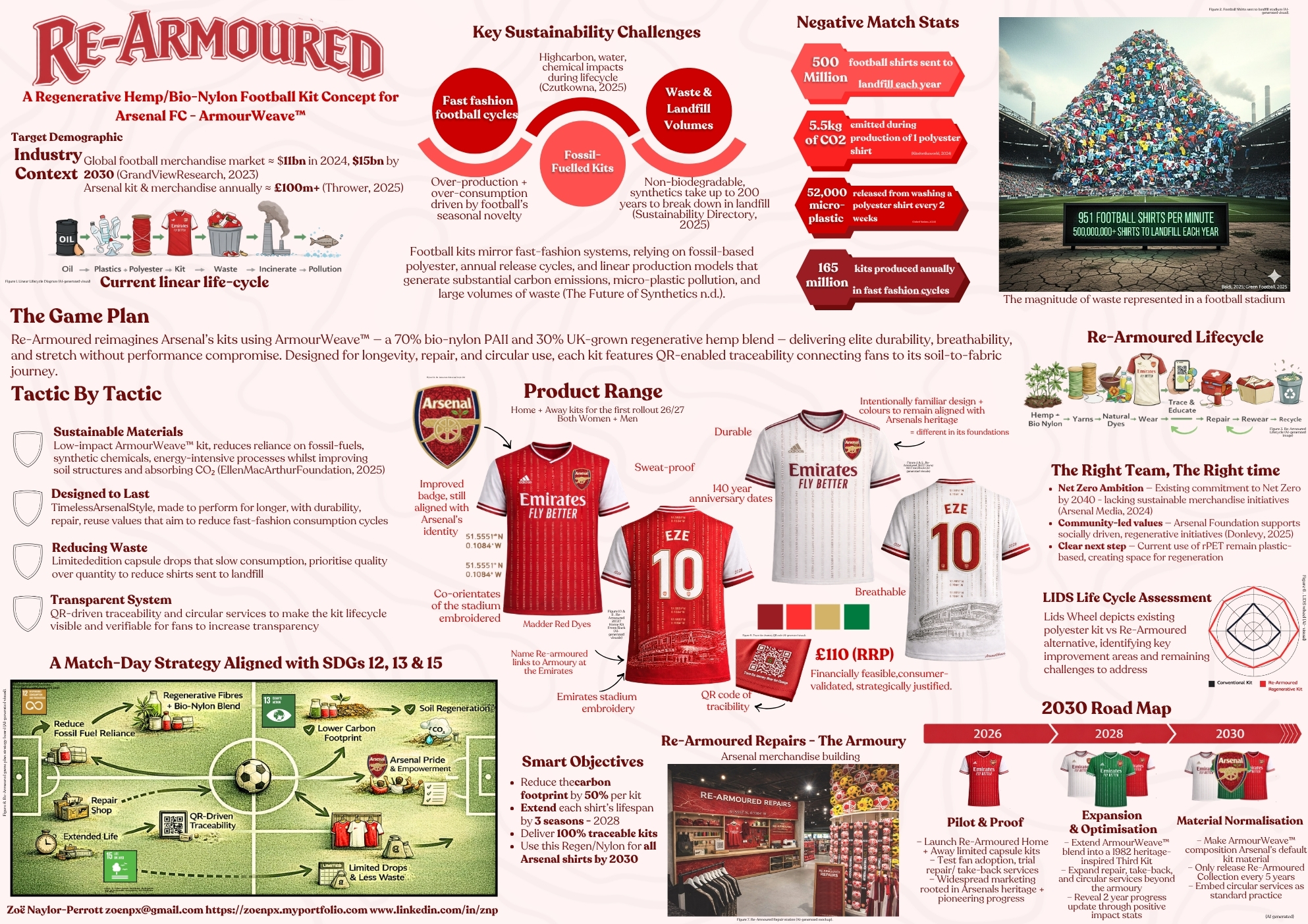
Re-Armoured. A Regenerative Future for Sportswear: Re-Armoured is a regenerative football kit concept developed for Arsenal F.C. that challenges the fast-fashion model dominating modern sportswear. Built around ArmourWeave™, a performance fabric combining bio-based PA11 and regenerative hemp, the project repositions the football shirt as a long-term cultural and material asset. Rooted in Arsenal’s heritage and “The Armoury” identity, Re-Armoured merges elite performance, circular design, and regenerative material innovation to propose a more sustainable future for football merchandise. Through regenerative materials, lifecycle thinking, and circular recovery systems, the project reduces reliance on fossil-based synthetics while maintaining professional performance standards.
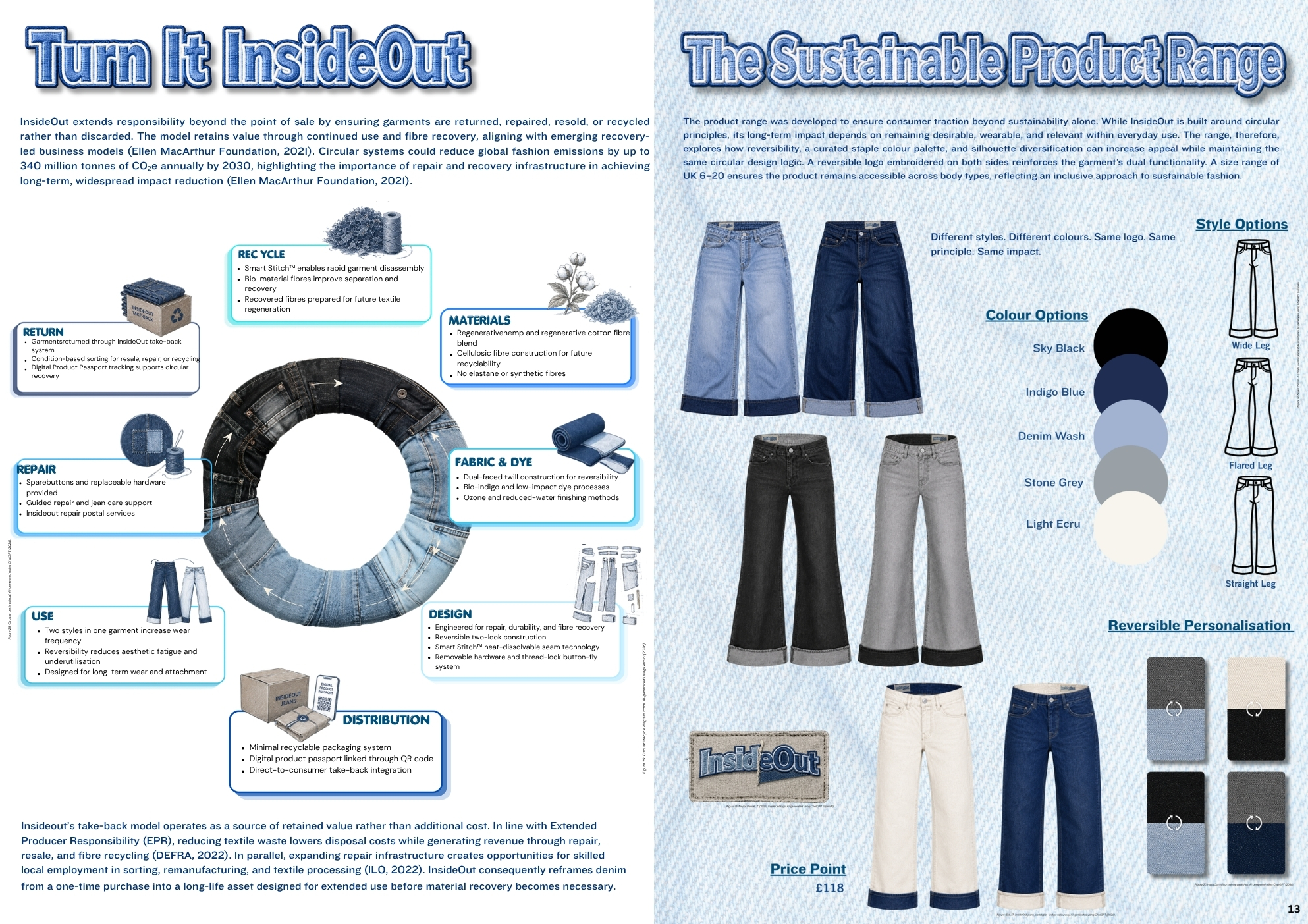
InsideOut. Redefining Denim: InsideOut is a circular denimconcept designed to extend garment lifespan through reversibility, repairability, and fibre recovery. Developed in response to denim’s linear production model, the project reimagines jeans as long-term assets rather than disposable fashion products. Constructed from a 55% regenerative cotton and 45% hemp mono- durability, reversibility, and Smart Disassembly™ technology to support longer use and future fibre recovery. The concept operates within a wider fashion maintenance economy framework, where value is generated through continued use, repair, and recovery rather than repeated replacement. By integrating design for disassembly, digital product passports, repair infrastructure, and material recovery pathways, InsideOut demonstrates how circularity depends not only on better products, but on coordinated systems that extend responsibility beyond the point of sale.